
Top 5 Pencil Drawing Tips for Beginners: Realism Made Simple

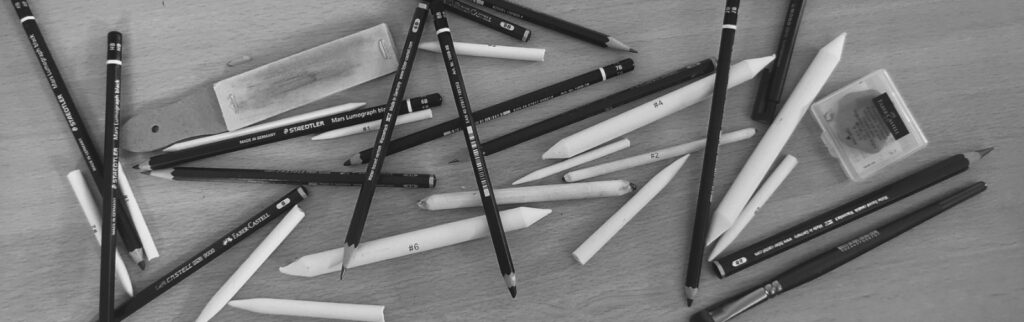
Graphite pencils, blending stumps, and drawing tools used in Yasmin Hadbaoui’s pencil drawing tutoring sessions in Manchester.

Whether you’re just picking up a pencil for the first time or looking to improve your sketching technique, realistic drawing doesn’t have to feel intimidating. As a realism artist and art tutor, I’ve worked with beginners of all ages — and I always say: mastering pencil drawing comes down to patience, observation, and the right techniques.

In this post, I’ll share 5 pencil drawing tips that will instantly level up your work — no expensive supplies or complicated tools needed.

1. Start With the Right Pencils (But Don’t Overcomplicate It)

A common mistake beginners make is thinking they need a full set of 30+ pencils. In reality, just three or four quality graphite pencils are enough to start with. I recommend:
•2H – for light sketching
•HB – for outlines and midtones
•2B or 4B – for soft shading and depth
•6B or 8B – for bold, dark areas
 
Pro Tip: Brands like Faber-Castell, Staedtler, and Derwent are affordable and reliable.

2. Observe More Than You Draw

Realism is all about accurate observation. Before making a single mark, spend a few minutes just studying your subject. Ask yourself:
•Where is the light coming from?
•Which parts are the darkest?
•Are there soft edges or sharp lines?
 
If you’re drawing from a photo, try converting it to black and white to better understand contrast and tone.

3. Use Light Layers — Don’t Press Too Hard

One of the biggest mistakes beginners make is pressing too hard, too fast. The key to smooth blending and realistic depth is building up soft layers gradually.
•Start with light pressure using a harder pencil (e.g., 2H).
•Slowly add darker tones with softer pencils (e.g., 4B).
•Blend gently with a blending stump, tissue, or just the pencil itself.
 
Remember: You can always go darker — but you can’t go lighter without erasing and damaging the paper.

4. Don’t Neglect the Background

Many beginners focus so much on the subject that they leave the background blank. But a simple shaded background can make your drawing look 10× more professional.
 
It helps:
•Create contrast
•Draw focus to the subject
•Add realism and depth
 
Even a subtle gradient behind a portrait can give your artwork that polished gallery feel.

5. Practice Hands, Eyes, and Faces Regularly

Want to draw realistic people? Then get comfortable drawing hands, eyes, and faces — these are the hardest parts, but also the most rewarding.
•Break complex features into shapes (e.g., almond for eyes, triangles for noses).
•Practice from both reference photos and life.
•Don’t be afraid to get it wrong — every mistake teaches you something.

The Bottom Line

Realistic pencil drawing is a skill anyone can learn with the right mindset and practice. Whether you’re an absolute beginner or looking to refine your sketching skills, starting with strong fundamentals is the key. These tips are the same ones I teach in my private art workshops in Manchester and through my online drawing classes. If you’re looking for guidance, feedback, or structured lessons, check out my art tutoring options — available in-person and remotely.

From learning how to shade with confidence to drawing realistic eyes and portraits, I’m here to help you grow as an artist — one pencil stroke at a time.

Leave a Comment

Your email address will not be published. Required fields are marked *